

As educators seek the best ways to reinforce the skills necessary to flourish in an increasingly complex world, the importance of critical thinking—particularly in an age of artificial intelligence (AI) and social media—is undeniable.
Critical thinking is already central to the IB’s Diploma Programme (DP), in the form of Theory of Knowledge (TOK)—a course where students grapple with and interrogate the nature of knowledge itself. But as the significance of critical thinking grows, one school is exploring opportunities for TOK’s positive impact to be experienced even more widely.
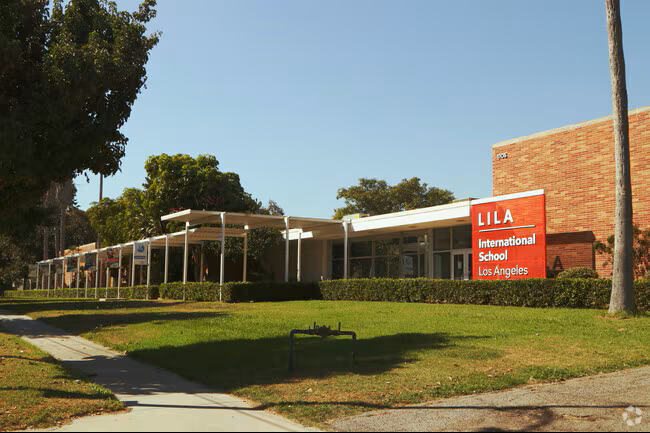
At the International School of Los Angeles (LILA), incoming Head of School Conrad Hughes wanted to offer the power of TOK to a brand new cohort: students not enrolled in the DP.
The aim was to ground more students in critical thinking, and to create a bridge between students following the IB and those following other programmes.
Hughes, a philosophy and TOK teacher and an IB graduate himself, partnered with Nick Alchin, Head of the United World College of South East Asia, to design the pilot course. With support from IB Director General Olli-Pekka Heinonen, and as part of the IB's ongoing commitment to innovation in IB World Schools, LILA was authorized to run this special TOK course for all Grade 11 students.
The course includes eight tailored lessons on knowledge and the knower, culminating in all students participating in a mini-TOK exhibition. It is currently running in the early part of the 2026–2027 school year, taught by Dr Daniel Martini, LILA's Head of TOK.
In an era where truth is increasingly contested, epistemological rigour has become an essential competency, said Hughes, a Professor in Practice at Durham University’s School of Education.
“Expanding Theory of Knowledge to all students empowers them to navigate a post-truth world with clarity and conviction,” he said. “In fact, 78% of surveyed students reported greater awareness of their own perspectives and assumptions after taking the course.”
What does it mean to think critically when students can access knowledge instantaneously, answering questions without having to think for themselves, simply by using large language models or drawing on other people's posts and feeds? How do we work with new technologies so that they can deepen our thinking, not hold it back?
In TOK, students grapple with major epistemological questions through various lenses, reflecting on their own experiences as knowers and on the ongoing question: how do we know?
The assessment structure includes an exhibition, in which students choose a prompt and respond to it through their own philosophical reflection on three objects that have personal significance for them. Classes are discussion-based and deliberately provocative, extending the boundaries of thinking and challenging each student to consider their own biases and limitations in the search for knowledge.
These elements of critical thinking have become more important than ever in an age of AI and social media. They help ensure that knowledge remains independent, authentic, and shared through human-centred activities such as debate, critique, and questioning.
In Los Angeles, the goal of the LILA pilot is to assess the impact of the course on students through feedback from both students and the teacher. This will allow the IB to improve the pilot, then consider rolling it out to more schools around the world.
A mini-TOK course offers a way to address one of the most pressing issues of our time: ensuring that we think deeply and personally about the world around us. We look forward to observing the course's development and its impact on students.
Takeaways
- Critical thinking is essential in the age of AI. In an age of AI and social media, students need opportunities to question information, explore their own biases and reflect on how they know what they know.
- Theory of Knowledge can benefit all students. LILA's pilot aims to extend the TOK experience beyond the Diploma Programme, helping more students develop critical thinking skills and creating connections between different educational pathways.
- Inquiry and discussion deepen learning. Through philosophical questions, debate and a mini-TOK exhibition, students are encouraged to think independently, reflect on their experiences and engage with different perspectives.
- Pilots can spark widespread innovation. LILA's eight-lesson course will gather feedback from students and teachers to assess its impact, refine the approach, and explore the possibility of bringing it to more IB World Schools around the world.
 and social media—is undeniable. )